

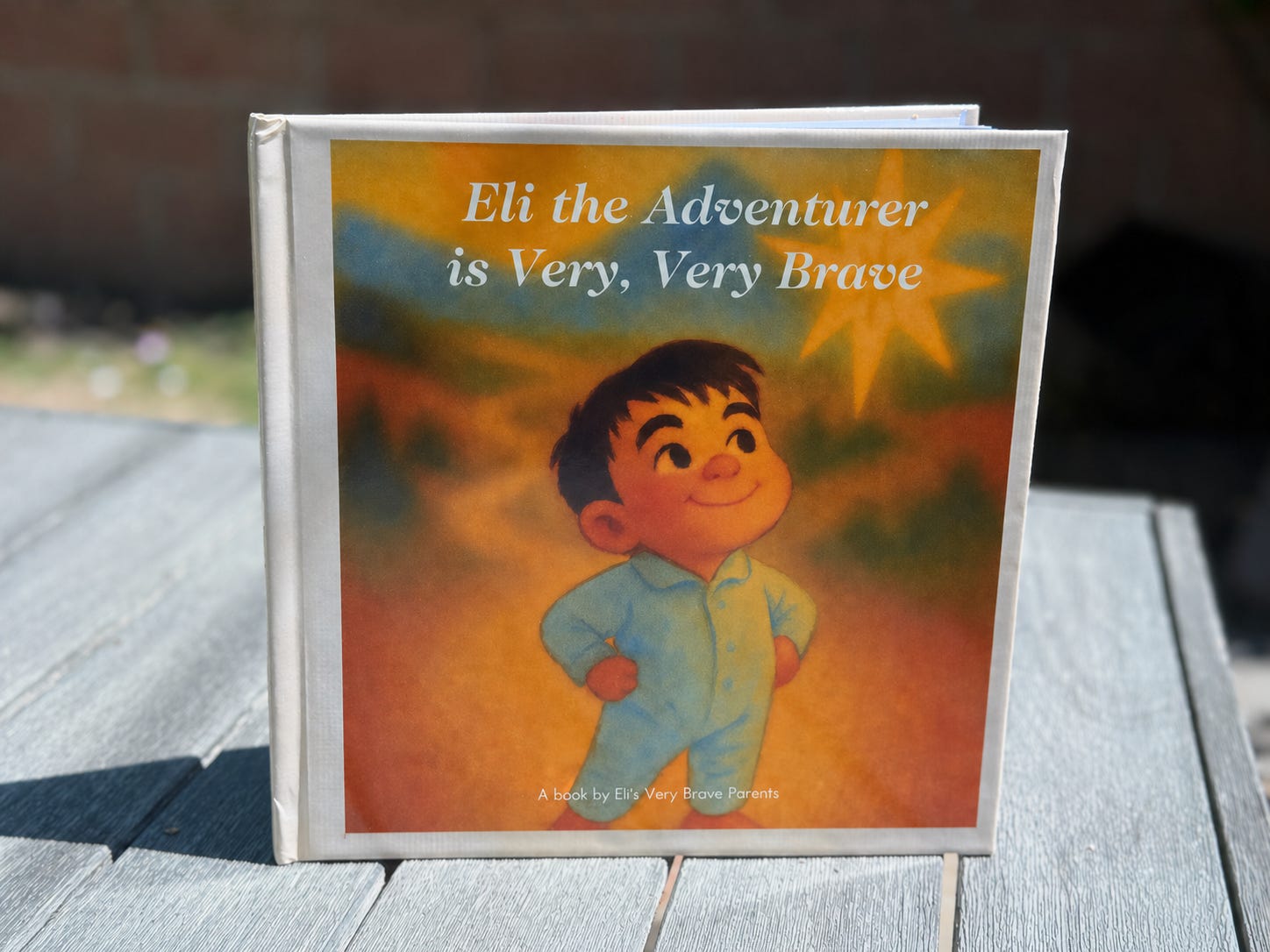
One morning in early 2025, I got a voice memo from my close friend Sarah. She and her husband and infant son Eli had been hit head-on by an extremely drunk driver.
They were okay, in the sense that they were all alive — but it was a terrifying experience. And in the days and weeks that followed, they navigated a long process of identifying and treating numerous very serious injuries. For months, their lives were turned upside down.
During that time, Sarah and her family were on my mind often. But living on the other coast, it was hard not to feel a little useless. I sent a care package, helped research apartments, and wished I could do more.
Before the crash, Sarah and her husband had made little books for their son (called Eli the Adventurer) about memorable moments in his life, like his first beach vacation or a weekend with his grandparents. They used real photos and used the books to tell him stories about the adventures he had been on and remind him of important people in his life.
Sarah’s husband had the idea (and Sarah’s therapist agreed!) that creating an Eli the Adventurer book about the crash could be a good way of explaining the accident to Eli — it would be something gentle and concrete a toddler could hold and return to. But while the other Eli the Adventurer books used real photos, they felt that including real photos of the crash would have been too scary and intense. So Sarah — knowing I’d been spending a lot of time creating genAI images and videos lately—asked if I could help illustrate it with my robot friends, and I was eager to help.
Our process
Sarah and her husband wrote the text for the book and sent me reference photos to use. I made the illustrations using OpenAI’s Sora, which felt to me like the best tool for this kind of warm, storybook aesthetic. Disclosure: I’m an OpenAI Artist, which comes with free credits. (A note: Sora has since been discontinued, but you can still generate images with ChatGPT.)
The process was collaborative and asynchronous — Sarah, her husband, and I went back and forth in a shared Google Doc, with Sarah leaving comments on each spread. I think people who haven’t generated images with AI think of it as instant, but in reality, I did a few versions of generations for each image before sharing with Sarah + her husband, and then for most of the images, we did 1-3 revisions based on their feedback.
An early note: the skin tones for Eli and the family were coming out too light, even though Sora was working from actual photographs of them. It was a straightforward fix, but it’s a meaningful reminder that these models still default lighter unless you actively prompt against it — even when given reference images of real people.
On disclosure and consent
If you’ve been reading this newsletter for a while, you know I spend a lot of time on disclosure and consent for AI images that tell real stories. Here, though, the primary “audience” is one toddler and his family. There’s no viewership to mislead. The consent question flips too: the subjects are the commissioners. It was refreshing to work on something where the ethical questions had such clear answers.
Without further ado… the book is called Eli the Adventurer is Very Very Brave. Click through the two image galleries below to see it in full:


None of the three of us had illustration backgrounds, or the budget to hire an illustrator. But a very brave toddler now has a book where he can see himself and his family, and hold something that helps him make sense of the hardest thing that’s happened to him.
It’s not the typical way I use AI in my work, but…if this isn’t a good use of image generation, I don’t know what is.
Thank you to Sarah and her family for letting me be part of this process and letting me share this story.
P.S. A note on names and privacy: This story was, of course, published with the permission of Sarah and her husband. Sarah was fine with me using her real first name, but her husband preferred I left his name out, which is why he is referred to as her husband throughout. Additionally, and for privacy reasons, we decided to change “Eli’s” name. Eli is not the real name of the toddler in question — the name was changed in this blog post and in the images of the book, for the privacy of our brave little friend.
A heart warming case study!